
Jewelry photography is one of my specialties—not only for the beauty of the subject, but for the precision it demands. I love capturing metal, gemstones, and fine detail at a high level. It requires control, consistency, and a deliberate technical approach.
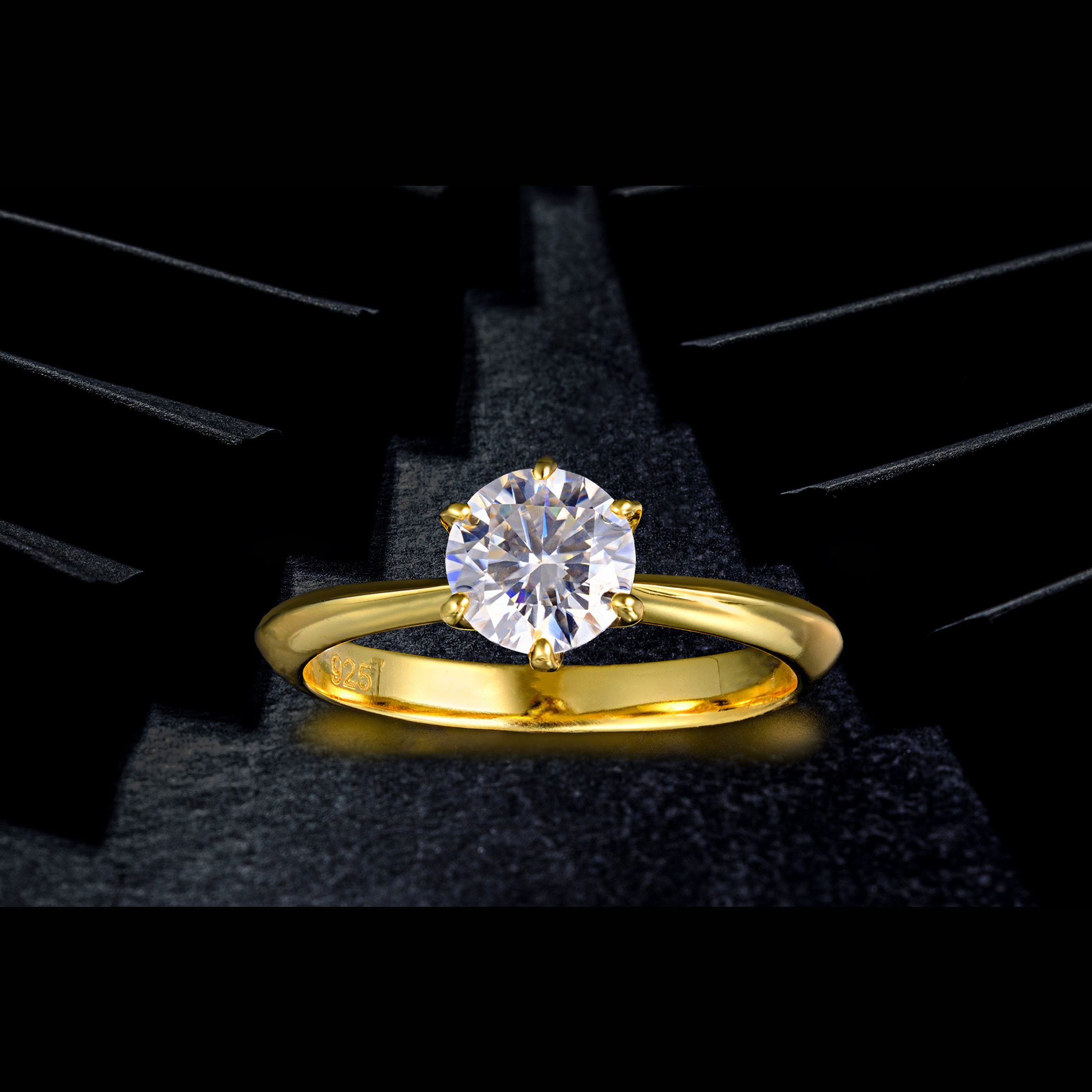
One technique I use, and central to this work is focus stacking. While the final image may appear simple, it is built from multiple frames, each focused at a different point, and combined to achieve complete sharpness from the front of the gemstone through the back of the band—something a single exposure cannot accomplish due to the limitations of macro photography and the resulting shallow depth of focus.
The Setup
The scene begins with a controlled, neutral foundation. Rings are mounted on non-glare glass, supported above the surface to allow clean reflections and separation. Materials are carefully chosen to avoid unwanted color casts and visual distractions, ensuring accurate rendering of both gold and silver. The gold ring above was photographed with black underneath the glass, allowing me to create the gold reflection in the glass, and underneath the ring. The textured background was photographed separately then composited for the dynamic composition.
Lighting
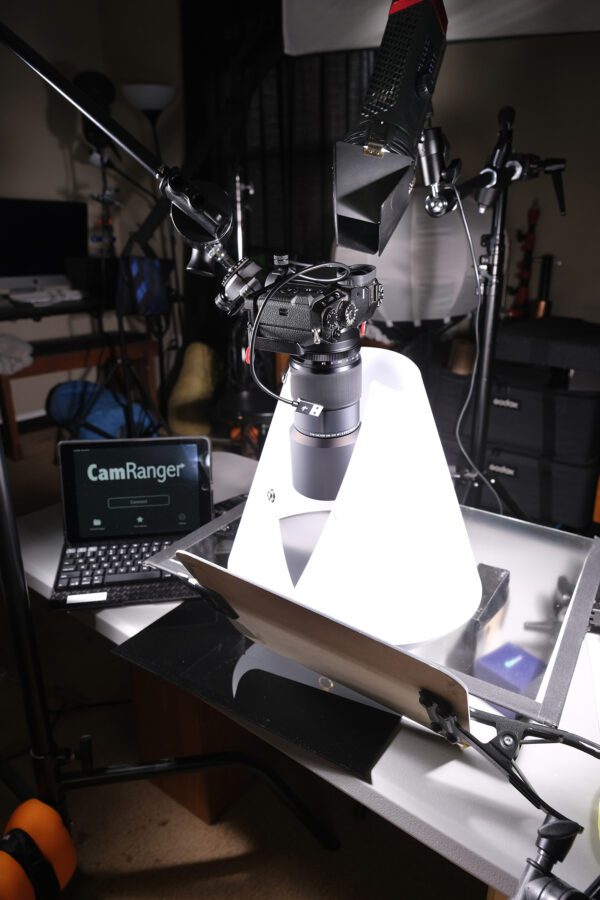
Lighting is constructed to balance clarity and brilliance. A three-light setup—left, right, and overhead—provides shape and dimension. The overhead light is left undiffused to bring out the sparkle in the stones, while diffusion elsewhere controls reflections on the metal surfaces.
Each light is metered individually, then balanced as a system to maintain consistency across every frame in the stack.
Why Continuous Light
While strobes remain useful, I often prefer modern, color-accurate LED lighting for this work. Continuous light allows real-time evaluation of reflections and highlights—and more importantly, simplifies the precision required for focus stacking.
Because focus stacking depends on capturing a sequence of perfectly consistent exposures, the ability to see and refine lighting continuously is a significant advantage.
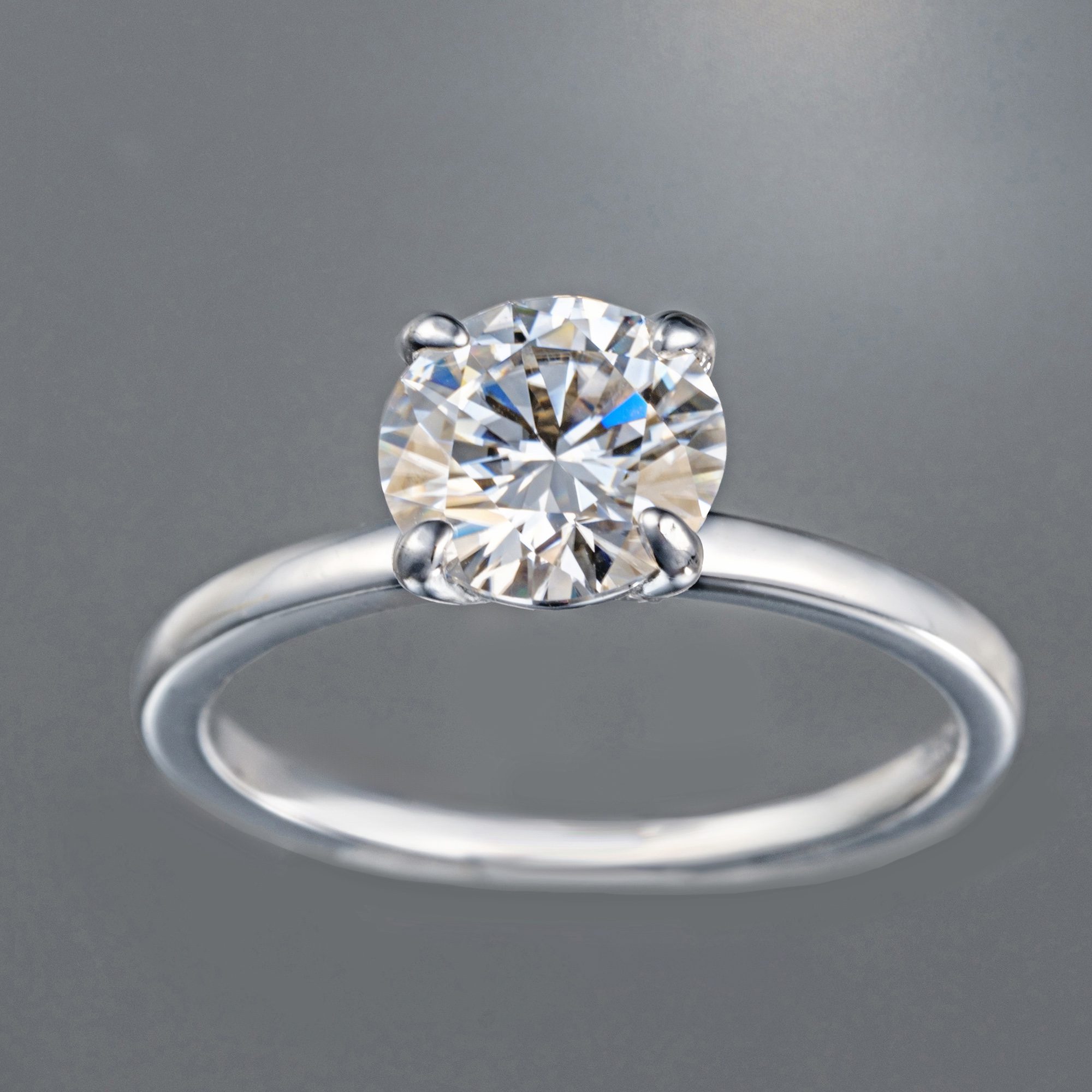
An example of a ring photographed without focus stacking. While I prefer to stack jewelry images for greatest detail and sharpness, not all clients and not all jewelry require it. Not stacking may save money as one option. It may also enhance a particular feature while allowing less important elements to go out of focus. This can direct attention to what we wish.
At its best, jewelry photography is a blend of craftsmanship and technique. Focus stacking is what makes it possible to render every surface, edge, and facet with the clarity clients expect.